Dermatologists usually treat keloid scars with a combination: steroid injections into the scar to flatten and soften it, silicone sheets or gel, and sometimes freezing (cryotherapy), laser or surgical removal. Keloids are known for coming back, so treatment always includes a plan to stop them returning, and removing a keloid by surgery alone is rarely enough. Starting treatment early, while a keloid is still small, usually gives a better chance of control.
What is a keloid?
A keloid is a raised, firm scar that grows beyond the edges of the original wound. It happens when the skin keeps making collagen after a wound has healed. Keloids can follow:
- Ear piercings and other piercings
- Surgery, including caesarean sections
- Acne, especially on the chest, back and shoulders
- Cuts, burns, insect bites and vaccinations
- Sometimes, no clear injury at all
They can itch, feel tender, and darken in colour, especially in the sun.
Keloid or hypertrophic scar?
| Keloid | Hypertrophic scar | |
|---|---|---|
| Edges | Grows beyond the original wound | Stays within the wound |
| Timing | Can appear months after the injury and keep growing | Appears within weeks |
| Over time | Rarely shrinks by itself | Often flattens over 1 to 2 years |
| After removal | Often comes back | Less likely to come back |
A dermatologist can tell them apart, which matters because the treatment plan is different.
Who gets keloids?
Anyone can, but keloids are more common:
- In people with darker skin tones, including many people of African, South Asian and Middle Eastern background
- When there is a family history of keloids
- Between puberty and the age of 30
- On the chest, shoulders, upper back and earlobes
If you know you form keloids, tell any doctor before surgery, piercing or skin treatments.
How do dermatologists treat keloids?
Treatment is chosen for the size, age and place of the keloid. Common options include:
- Steroid injections. Injections into the keloid every 4 to 6 weeks soften and flatten it, and ease itching. This is often the first step.
- Silicone sheets or gel. Worn daily for several months, silicone helps flatten scars and is often used after other treatments.
- Cryotherapy (freezing). Freezing smaller keloids can shrink them, often combined with injections.
- Laser. Some lasers reduce redness and improve texture, usually as part of a combined plan.
- Surgical removal. Cutting a keloid out can help large keloids, but on its own it often leads to a bigger keloid, so it is combined with injections, pressure or other treatment afterwards.
- Pressure. Pressure earrings after earlobe keloid removal help stop regrowth.
At 7 Dimensions Medical Centre (7DMC), your dermatologist examines the scar and tells you which options are available and which suit your keloid.
How do you stop a keloid coming back?
Keloids come back often, even after good treatment. These steps lower the chance:
- Combine treatments rather than relying on one.
- Keep up silicone and follow-up injections for as long as your dermatologist advises.
- Treat early. Small keloids respond better than large, old ones.
- Avoid new injuries in keloid-prone areas, including new piercings and tattoos.
- Protect the scar from the sun. UV can darken keloids, and Dubai’s sun is strong all year, so cover the scar or use SPF.
- Treat acne early, especially on the chest and back, to prevent new keloids.
How long does keloid treatment take?
Most plans take several months. Injections are usually repeated every 4 to 6 weeks until the keloid has flattened, and silicone is often used for 3 to 6 months afterwards. Results vary from person to person, and some keloids need treatment again later.
When should you see a dermatologist?
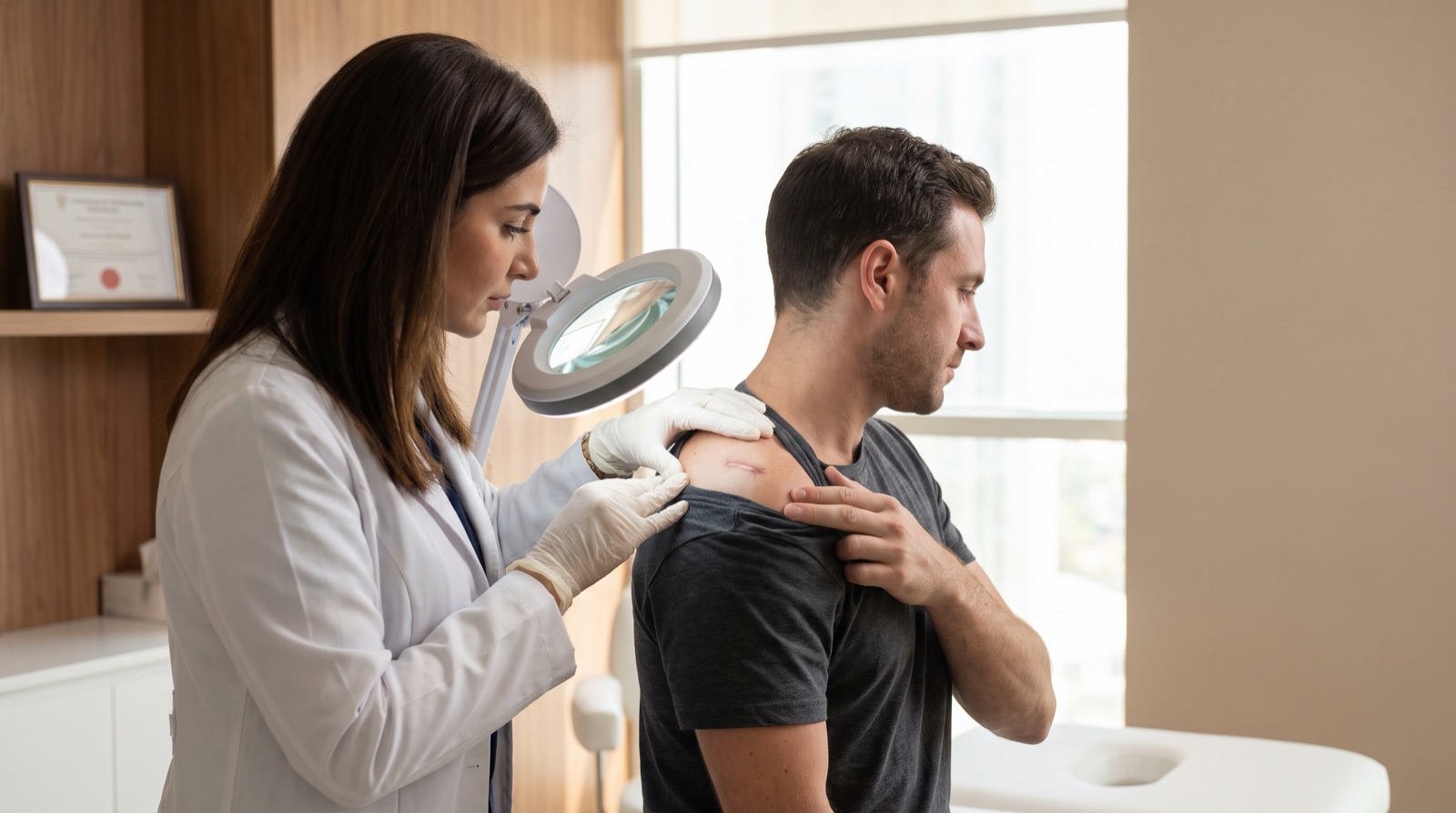
See a dermatologist if a scar keeps growing, itches or hurts, spreads beyond the wound, or affects your confidence. Also book a check if a raised scar changes quickly, bleeds or looks different from your other scars, so other causes can be ruled out.
For flat or pitted scars, see our guides to injury, surgery and acne scars and laser treatment for scars, or CO2 laser resurfacing in Dubai.
Planning surgery or a piercing if you form keloids
If you have had a keloid before, planning ahead lowers the risk of another:
- Tell your surgeon or dermatologist first. They can plan the cut, the stitches and preventive treatment after surgery.
- Ask about early prevention. Silicone and, in some cases, early injections started as the wound heals can stop a keloid forming.
- Think twice about new piercings and tattoos, especially on the earlobes, chest and shoulders.
- Treat acne early on the chest and back, so spots do not leave keloids.
- Watch new scars. If a scar starts to rise, itch or spread beyond the wound, book a check straight away; small keloids respond better.
Frequently asked questions
Can keloids be removed for good?
They can be flattened and controlled, but they often come back, so treatment includes a plan to prevent regrowth.
Do keloid injections hurt?
They can sting, and keloids are firm, so a numbing cream or a local anaesthetic is sometimes used.
Can I get a keloid removed by surgery?
Yes, but surgery alone often leads to a bigger keloid. It is usually combined with injections, pressure or silicone afterwards.
How do I stop a piercing keloid coming back?
After treatment, pressure earrings, silicone and follow-up injections help. Avoid re-piercing the same spot.
Visit 7 Dimensions Medical Centre
You can book at 7 Dimensions Medical Centre in Dubai at our clinics in Jumeirah and Al Barsha. Our team will tell you which clinic offers the treatment you need.
Results vary from person to person.