Maya M.h★★★★★
…I trust Dr. Iman’s judgment on what my skin needs. The staff is really friendly, respectful. I highly recommend paying a visit.Google review · 7DMC Al Barsha


Eczema (dermatitis) is a common skin condition that makes skin dry, itchy, red and inflamed, often in flare-ups that come and go. Treatment aims to calm the skin, control flare-ups and help you spend more time with comfortable skin. At 7 Dimensions Medical Center (7DMC) our dermatology doctors diagnose the type of eczema, look for your triggers and build a treatment plan for adults and children, at our Jumeirah (Umm Suqeim 3) and Al Barsha (Arjan) branches.
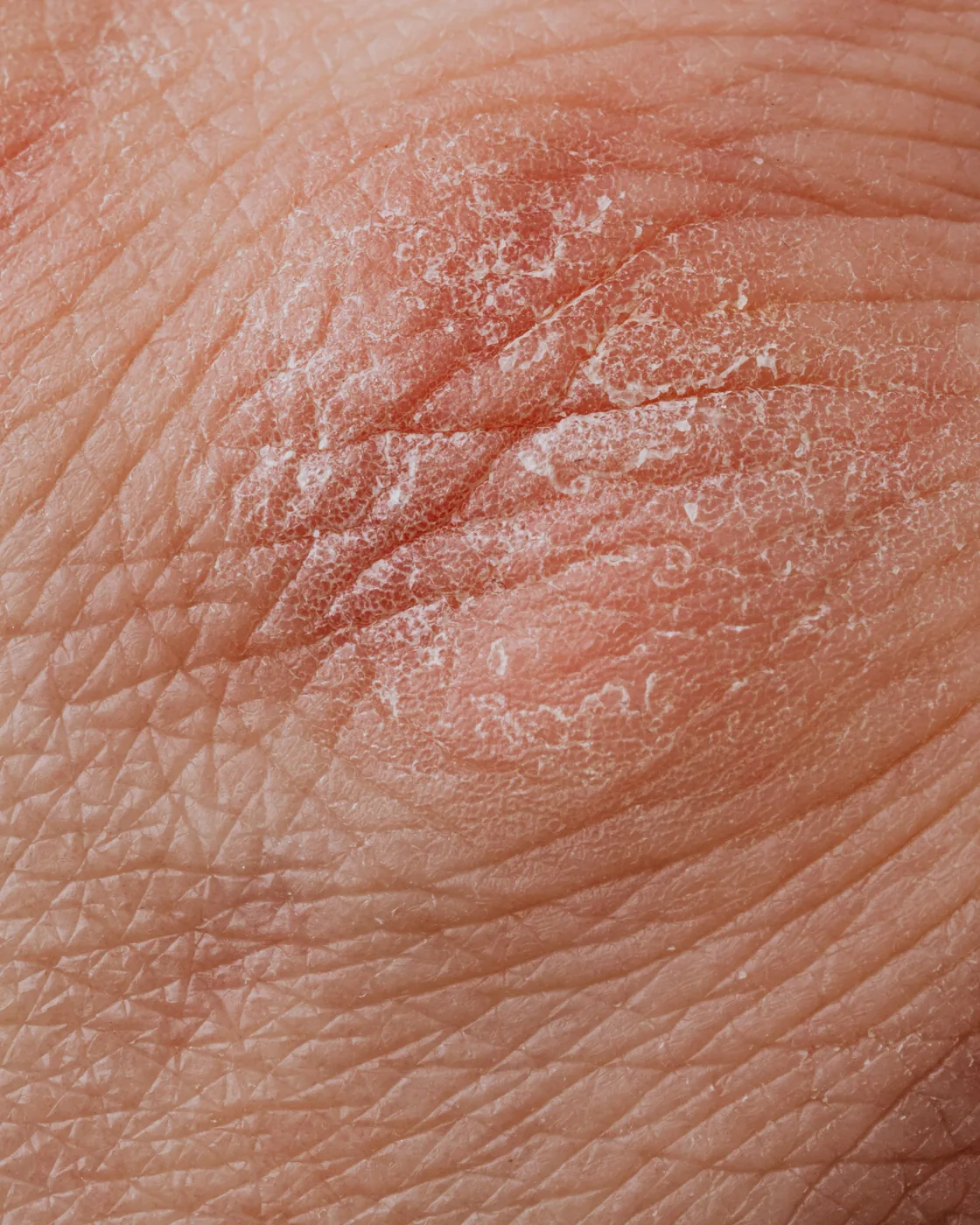
Eczema is a long-term inflammatory skin condition in which the skin barrier does not hold moisture well and the immune system overreacts to irritants and allergens. The result is dry, itchy skin that can become red, scaly, cracked, weepy or thickened from scratching. It is not contagious. For many people it is a lifelong tendency that can be managed well, with calm periods and occasional flare-ups.
Dubai's climate can make it harder: air conditioning dries the skin, heat and sweat trigger itching, and hard water and long hot showers strip natural oils.
| Type | What it looks like | Common triggers |
|---|---|---|
| Atopic dermatitis (atopic eczema) | Dry, itchy patches, often in the elbow and knee creases, face and neck | Dry air, sweat, soaps, stress; often linked to asthma or hay fever |
| Contact dermatitis | A rash where the skin touched something | Fragrance, nickel, hair dye, detergents, gloves |
| Seborrhoeic dermatitis | Flaky, greasy patches on the scalp, eyebrows and sides of the nose | Yeast on the skin, stress, cold or dry weather |
| Dyshidrotic eczema (pompholyx) | Small itchy blisters on the palms, fingers or soles | Heat, sweating, wet work |
| Hand eczema | Dry, cracked skin on the hands | Frequent hand washing, sanitiser, wet work |
It suits adults, teenagers and children who have:
Some situations need a doctor sooner, or a different plan:
…I trust Dr. Iman’s judgment on what my skin needs. The staff is really friendly, respectful. I highly recommend paying a visit.Google review · 7DMC Al Barsha
My experience with Dr Iman Fares was beyond exceptional. She is an extremely professional and talented dermatologist. I am super happy with the results and would highly recommend herGoogle review · 7DMC Al Barsha
Dr Iman is very professional, she’s doesn’t push for any unnecessary procedure , lovely and friendly environment.Google review · 7DMC Al Barsha
Talk to our team at Jumeirah or Al Barsha. We will answer your questions and help you choose the right next step.
Most eczema can be managed with the first two steps. Stronger options are for moderate to severe eczema that has not settled.
With a clear plan, many people notice less itching and redness within 1 to 2 weeks. Eczema tends to come and go, so the aim is long-term control: fewer and milder flare-ups, and knowing how to act quickly when one starts. Most people need one or two follow-up visits to get the plan right, then reviews as needed. Results vary from person to person.
Eczema treatments are generally well tolerated when used as prescribed, but each has side effects to know about. Strong steroid creams used too long or on thin skin can thin the skin or cause stretch marks, which is why your doctor sets the strength, area and duration. Non-steroid creams can sting or burn for the first few days. Phototherapy can cause redness like sunburn. Oral and injectable medicines have their own side effects, such as eye irritation or effects that need blood test monitoring, and your doctor explains these in detail before you start. Stopping treatment suddenly can cause the rash to return.
The cost of eczema treatment in Dubai usually ranges from AED 300 to AED 800 for a dermatology consultation, depending on whether it is a first visit or a follow-up, any tests and the clinic. Prescribed medicines are priced separately. Typical ranges: Dermatology consultation (first visit), AED 300 to AED 800; Follow-up visit, AED 200 to AED 500. These are typical market prices across Dubai clinics, not a 7DMC price list. At 7DMC, your exact price is confirmed at your consultation, before any treatment.
It is a plan to calm inflamed skin and keep it under control: daily moisturisers, prescribed anti-inflammatory creams for flare-ups, avoiding triggers, and stronger options such as phototherapy or tablets for severe eczema.
Many people feel less itchy within 1 to 2 weeks of starting a plan. Eczema often comes and goes over years, so the goal is fewer, milder flare-ups rather than a quick fix.
Regular thick moisturiser, the right strength of prescribed cream during a flare-up, cool compresses and keeping nails short. Your doctor tailors this to your skin.
Dermatitis is another word for eczema. Treatment depends on the type: atopic, contact, seborrhoeic or hand dermatitis each need a slightly different plan.
Eczema is a medical condition, so dermatology consultations are often covered, depending on your policy. Our team can check your cover before your visit.
Yes. Our dermatology doctors see children with a parent present, and use treatments suited to their age and skin.
7DMC has dermatology at two branches: Jumeirah, in Umm Suqeim 3 opposite Jumeirah Beach Hotel, and Al Barsha, in Arjan, Al Barsha South.
